

Every year we speak to students and graduates who are worried they don’t have the skills graduate ecologists need. They say things like “not good enough” to apply for ecology jobs. Usually the conversation starts with comments like, “I don’t know enough plant species”. Or, “I’m not very confident identifying grasses‘. Or maybe “I’ve only done a couple of bat surveys.”
If that sounds familiar, we’ve got you. We talked to principal ecologist and ETUK founder Sue Searle to find out what employers really want, and the answer might reassure you. After many years working in ecological consultancy, hiring staff, and training aspiring ecologists, she knows what employers want. “I can tell you that they don’t expect graduates to know everything. In fact, they know you won’t” says Sue. “Of course being able to identify species is important, but most of us spend our entire careers developing this skill. So, when I’m looking through a graduate CV or interviewing a graduate ecologist, I’m looking beyond this. I’m asking myself a much more important question: Does this person have what it takes to become a good ecologist?. And the answer to that question depends on far more than their species identification skills”.
So what are the skills graduate ecologists need and what are employers actually look for in graduate ecologists? Here are Sue’s answers.
Communication
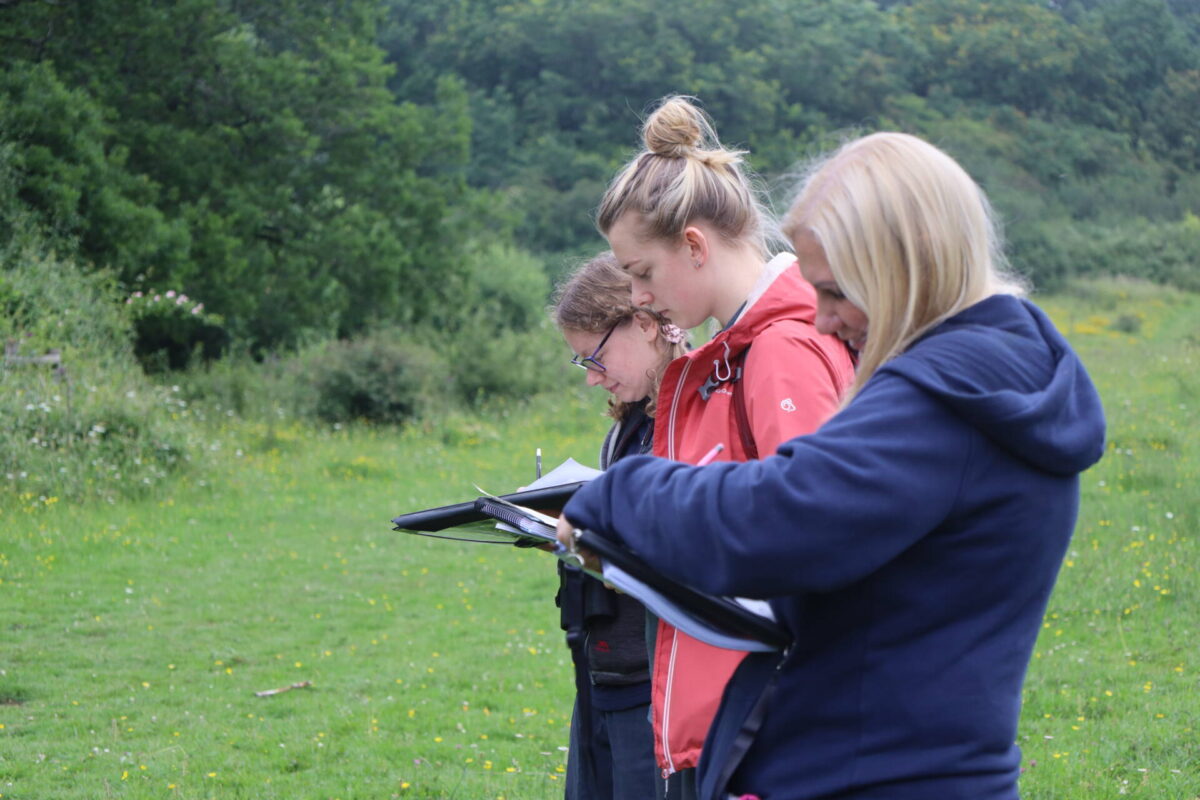
Ecologists spend far more time talking to people than many students realise. You’ll be discussing survey findings with colleagues, explaining recommendations to clients, speaking to contractors on site or liaising with planners and architects. Being able to communicate clearly and professionally is an essential part of the job. Equally important is being willing to listen, ask questions and admit when you’re unsure. Nobody expects a graduate to have all the answers, but they do expect honesty and a willingness to learn. S
Report Writing
Many graduates are surprised to discover that writing reports often takes longer than carrying out the survey itself. Collecting good data is only half the job; communicating it clearly is just as important and one of the key skills graduate ecologists need to learn. Ecological reports need to be accurate, logical and easy to understand because they form the basis of planning decisions and mitigation strategies. You won’t be expected to produce perfect consultancy reports from day one, but employers do look for graduates who can write clearly, organise information well and pay attention to detail.
Look out for our Report Writing course coming soon! We also cover this in our Certificate in Ecological Consultancy.
Teamwork
Despite the image of the lone ecologist wandering across a nature reserve with a pair of binoculars, ecology is very much a team profession. You’ll often work alongside other ecologists as well as engineers, planners, landscape architects, arboriculturists and contractors. Being reliable, approachable and willing to support your colleagues is just as valuable as having excellent identification skills. Some of the best ecologists I’ve worked with weren’t necessarily the most knowledgeable, but the people everyone enjoyed working with. If you can demonstrate this on your CV you will instantly be more likely to secure an interview.
Problem Solving
No two sites are ever quite the same. Access arrangements change, weather affects surveys, protected species appear where nobody expected them, and projects rarely go exactly according to plan. Employers value graduates who stay calm, think logically and look for practical solutions rather than becoming flustered when things don’t go as expected. So one of the skills graduate ecologists need is to demonstrate a calm, level head and be able to balance the needs of the job with the reality of the conditions.
Attention to Detail
Ecology is all about careful observations. Tiny details are often what is needed to make a positive identification or confirm presence (or absence) of an endangered or invasive species. The same attention to detail applies back in the office. A missing grid reference, miss-spelt name or just a simple typo can undermine your entire report. Employers quickly notice graduates who take pride in producing accurate, high-quality work.
Time Management
Survey season can be incredibly busy. You may be juggling multiple site visits, report deadlines, client meetings and travel, all while working within strict seasonal survey windows. Good time management is about planning your workload, prioritising tasks and recognising when you need support. Employers look for people who are organised, dependable and capable of meeting deadlines without compromising the quality of their work.
Health and Safety Awareness
While carrying out your job and protecting wildlife and habitats is important, your safety is more important. Ecologists often work beside busy roads, on construction sites, near water, in remote habitats or carry out surveys after dark. Employers want to know that you’ll follow risk assessments, wear the appropriate PPE and recognise and speak up when something doesn’t feel safe. No survey is worth risking an injury for. Health and safety awareness is a skill graduate ecologists need and an essential quality for all ecologists.
A Driving Licence
Having a driving licence and a car can make a significant difference when applying for graduate roles. Ecological consultants often travel to remote sites that aren’t easily reached by public transport, sometimes visiting several locations in a single day. While it’s certainly possible to start your career before passing your driving test, having a full driving licence will usually open up more opportunities.
IT Skills
Nowadays ecology relies more and more on technology. This helps us keep things accurate, concise and well-presented. We use computers for producing reports, analysing data, creating GIS maps and much more. So one of the skills graduate ecologists need is simple computer literacy. You don’t need to be an IT specialist, but employers value graduates who are confident using technology and willing to learn new software as the profession continues to evolve. Why not demonstrate your skills and a willingness to learn by taking one of our QGIS courses?
The Most Important Skills Graduate Ecologists Need
If I had to choose one characteristic that separates outstanding graduates from average ones, it wouldn’t be species knowledge, it would be a positive attitude.
The graduates who develop into excellent ecologists are usually those who are curious, reliable and eager to learn. They ask thoughtful questions, accept feedback positively, admit when they don’t know something and take pride in doing a good job. They understand that becoming an ecologist is a journey, not something that happens the day they graduate. While this might not necessarily be a skill as such, it it hugely important in gaining employment of any sort.
I have a saying: “I employ on attitude, I can teach them the rest.”
Species knowledge comes with experience. A positive attitude is something you bring with you from the very beginning.
So, if you’re worrying that you don’t yet know enough to start a career in ecology, you’re probably judging yourself far more harshly than any employer will. Every experienced ecologist began as a graduate who still had plenty to learn, and every one of us has continued learning throughout our careers.
So, instead of asking yourself, “Do I know enough?”, ask instead “Am I willing to keep learning?”
If the answer is yes, then you’re already developing one of the qualities employers value most.